
informational Pillar guide 6 min read
What Shibuya Sky Is: The Three Zones, Floor by Floor
Updated September 21, 2026
Shibuya Sky is an observation deck on the roof of Shibuya Scramble Square, a skyscraper built directly over Shibuya Station in Tokyo. The building tops out at 229.7 metres, and the deck is open to the air rather than enclosed behind glass, which is the single thing that distinguishes it from every other major viewpoint in the city. It opened in 2019 as part of the building, which was designed by Nikken Sekkei with Tokyu Architects & Engineers and JR East Design.
It is worth being precise about the relationship: Shibuya Sky is the attraction, Shibuya Scramble Square is the building underneath it. People searching for the building are usually looking for its shops and restaurants, which is a different thing entirely.
The three zones
The visit is structured as three named spaces, and the order is fixed.
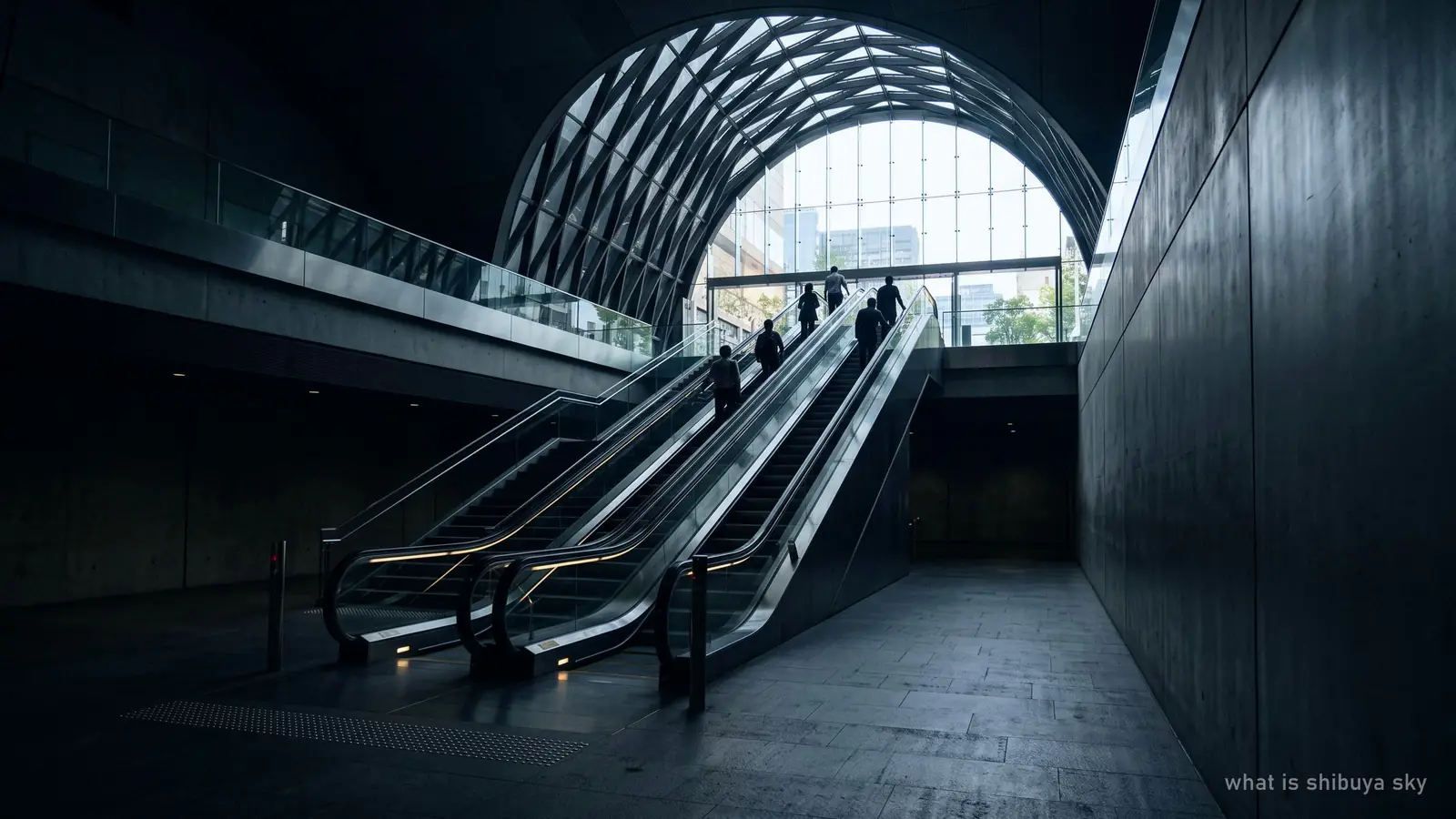
SKY GATE is the ascent, running from the entrance on level 14 up to level 45. It is deliberately not just a lift ride — the operator treats the transition as part of the experience, with a darkened approach and a long escalator near the top. This is the part people photograph on the way up.
SKY STAGE is the rooftop itself, and the reason to come. It is an open-air deck with high barriers at the edges and nothing overhead. The corners look straight down onto Shibuya Crossing. Because it is open, it closes when the weather turns, which is the main risk in booking a visit.
SKY GALLERY is the enclosed observation level on floor 46. It stays open when the rooftop does not, and it is where the lockers are.
The lockers are not optional
Before you go out onto the rooftop, bags and loose items have to be stored in lockers on level 46. Tripods and selfie sticks are prohibited on the observation space altogether. What you can take out is limited to a phone, glasses, and a camera that has a strap or fits in a pocket. Larger luggage will not fit the lockers on 46 and has to go into the coin lockers near Shibuya Station instead, so deal with suitcases before you start the ascent.
This rule exists for an obvious reason — anything dropped from 229 metres onto one of the busiest street corners on earth is a serious problem — but it catches out people who have come specifically to photograph the view.
How tall it actually is
The building is 229.7 metres, or about 754 feet, and the rooftop deck sits near the top of that. That makes it considerably lower than Tokyo Skytree at 634 metres and higher than the main deck of Tokyo Tower at 150 metres. Height is not really what Shibuya Sky is selling, though. The comparison pages for Skytree and Tokyo Tower go through what each gives you.
What you can see
Directly below is the Shibuya scramble crossing and the dense low-rise sprawl around it. On a clear day the skyline includes Tokyo Tower and Tokyo Skytree, and Mount Fuji appears to the south-west when the air is clean — far more often in the cold dry months than in the humid summer, which the visibility page covers.
The view changes character completely between daylight, the half hour around sunset and full dark. Most visitors want sunset, which is why those slots are the hardest to book.
The practical shape of a visit
Entry is by timed half-hour slot, bought in advance. Admission is 2,700 yen before 15:00 and 3,400 yen from 15:00, with a 300-yen premium for buying at the counter on the day. The whole thing takes about ninety minutes from the level 14 entrance to being back on the street, and the deck is open from 10:00 to 22:30 with last admission at 21:20.
Check prices & dates
Book your tickets in advance: popular time slots sell out.
Compare Shibuya Sky tickets